
Al Fahidi and the abra: a walking guide to Old Dubai
Updated 2026-10-13
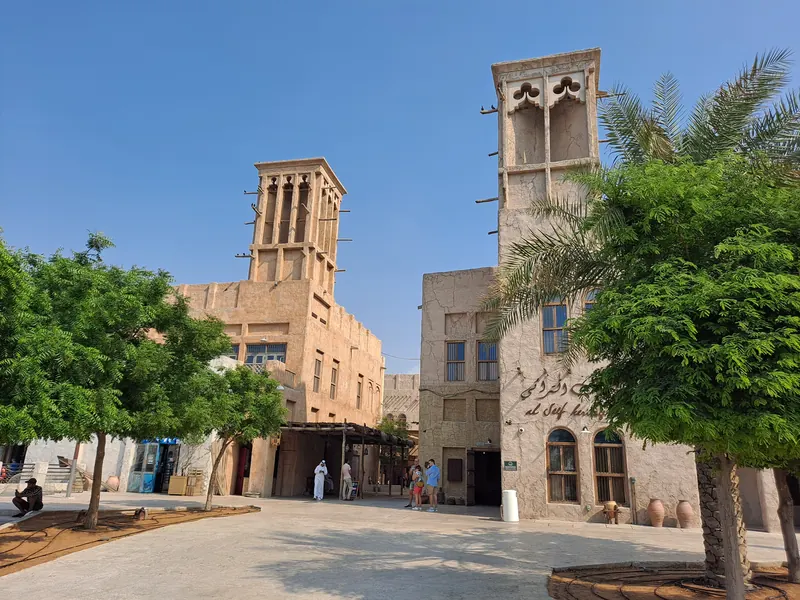
Short answer: the classic Old Dubai walk starts in the Al Fahidi Historical Neighbourhood in Bur Dubai, runs through the Textile Souk to the water, crosses Dubai Creek on a wooden abra, and finishes in Deira at the Spice Souk and the Gold Souk. It is flat, compact and easy to do in an afternoon. The best time is late afternoon into the evening, when it is cooler and the light on the Creek is at its best.
Most visitors see Dubai from the top of a tower. This walk shows the town it grew out of: a trading port on a natural creek, with merchants' houses, covered markets and boats that still carry cargo. Here is how to do it, stop by stop, with practical tips for the abra and for getting there.
Al Fahidi: what to see
Al Fahidi, also known as Bastakiya, is the best-preserved historic quarter in Dubai. It is a small area of narrow lanes and courtyard houses built from coral stone and gypsum, many with the wind towers (barjeel) that once caught the breeze and pushed it down into the rooms below.
What to look for as you walk:
- The wind towers. Look up at the square towers rising from the rooftops. They are the signature of the neighbourhood and a reminder of how people lived here before air conditioning.
- The lanes themselves. The alleys are deliberately narrow, which keeps them shaded. Wander without a plan for a while; the area is small enough that you cannot get lost for long.
- Carved doors and courtyards. Many of the old houses now host galleries, small museums and cafés, so you can often step inside and see the courtyard layout.
- Barasti walls. In places you will see walls and shelters made from palm fronds, the traditional building material for simpler homes.
- Al Fahidi Fort. At the edge of the district stands the fort, home of the Dubai Museum. Check opening times before you go if you want to visit inside.
Next to Al Fahidi, along the Creek, is Al Seef, a newer waterfront development built in a heritage style, with cafés and shops. It is pleasant for a stroll, but it is a modern reconstruction, so keep your camera ready for the real lanes first.
The Textile Souk
From Al Fahidi, head towards the water and into the Bur Dubai Textile Souk, part of the Old Souk. The covered arcade is lined with shops selling fabrics, pashminas, scarves and traditional garments, plus souvenirs and lamps.
It is also the first place most visitors try bargaining. A few simple rules help: ask the price first, smile, make a friendly lower offer and be ready to walk away politely if it does not work out. Nobody minds a polite "no, thank you".
Crossing Dubai Creek by abra
At the end of the Textile Souk you reach the Creek and the abra station on the Bur Dubai side, with Deira directly opposite.
What an abra is. A traditional wooden boat used as a water taxi, with a single bench running down the middle and passengers sitting back to back, facing the water. Abras have crossed the Creek for generations and are still used by people who work on both banks, not just by visitors.
How it works. Walk to the station, join the boat that is loading, and sit where the boatman points. Boats leave as they fill and the crossing takes only a few minutes. The fare is small and paid on board; carry a little cash in coins or small notes, as fares can change.
What you see. Wooden dhows moored along the Deira wharf, loaded with all kinds of cargo, the old waterfront buildings and, in the distance, the modern city. At sunset the whole Creek turns gold, which is why late-afternoon walks are so popular.
Tips for the crossing:
- Hold on to bags and phones; you are low to the water.
- Step on and off carefully, especially with children.
- If you want photos, try to sit on the side facing the direction you want to shoot.
The Spice Souk
The abra lands you in Deira, a short walk from the Spice Souk. You will smell it before you see it. Open sacks and shelves hold saffron, cardamom, cinnamon, dried lemons (loomi), dried roses, frankincense, oud, dried fruit and nuts.
It is a good place to buy something to take home. Saffron comes in different grades and qualities, so ask questions and compare a few shops before you buy. Again, a friendly bargain is normal.
The Gold Souk
A few minutes further on is the Gold Souk, with hundreds of jewellery shops and windows full of bangles, chains and rings. Even if you are not buying, it is a remarkable sight.
If you are buying, remember that the price of a piece is usually made up of the weight of the gold at that day's rate plus a making charge for the craftsmanship. The making charge is where there is most room to negotiate. Ask for both figures, compare shops and take your time.
Getting there and away
- By metro: for the start, the nearest station to Al Fahidi is Sharaf DG (formerly Al Fahidi) on the Green Line. On the Deira side, Al Ras and other Green Line stations are within walking distance of the souks, so you can finish the walk and ride straight back.
- By taxi: ask for Al Fahidi Historical Neighbourhood in Bur Dubai to start, and you can easily find a taxi near the Gold Souk at the end.
- Is Dubai walkable? Much of modern Dubai is built for cars, but Old Dubai is the exception. This route is flat and compact, with the abra doing the only "transport" in the middle.
When to go
Late afternoon is the sweet spot for most of the year: the heat eases, the souks are lively and the Creek is at its most beautiful at sunset. In the cooler months, mornings are lovely too. In summer, avoid the middle of the day. Dress modestly in the older districts, wear comfortable shoes and carry water.
Doing it with a guide
The route is easy to follow on your own. What a guide adds is the story behind it: why the wind towers work, how the Creek made Dubai, what is worth buying, what a fair price looks like and how to ask for it.
Our private walk follows exactly this route: Al Fahidi, the Textile Souk, the abra across the Creek, the Spice Souk and the Gold Souk, about 20 minutes at each stop. It starts at the entrance of Local House Restaurant on Al Fahidi Street, with starts every hour from 09:00 to 21:00, and finishes at the Gold Souk, where your guide helps you to the metro or a taxi. The meeting-point option is about 2 hours; the hotel transfers option is about 3 hours including the private drive. It is private, so only your group walks with the guide, and it is listed as wheelchair and stroller accessible. See the route, prices and guest reviews.
Frequently asked questions
What is there to do in Al Fahidi?
Walk the coral-stone lanes and look at the wind towers, step into courtyard houses that now host galleries and cafés, see Al Fahidi Fort, and then continue through the Textile Souk to the Creek for the abra crossing.
Where is the abra station near Al Fahidi?
On the Bur Dubai side of Dubai Creek, at the waterfront end of the Old Souk and Textile Souk, a short walk from Al Fahidi. The boats cross directly to Deira, near the Spice Souk.
How long is the abra ride across Dubai Creek?
Only a few minutes. Boats leave as they fill, so waits are usually short. Carry a little cash for the fare, which is paid on board.
How do I get to Al Fahidi by metro?
Take the Green Line to Sharaf DG station (formerly Al Fahidi) and walk to the historic neighbourhood. On the Deira side, Al Ras station is close to the souks for the trip back.
What is the best time to visit Al Fahidi and the souks?
Late afternoon into the evening for most of the year, when it is cooler and the Creek looks its best at sunset. In summer, avoid midday.
How much does the guided walk cost?
USD 169 per private group of 1 to 6 from the meeting point in Al Fahidi, or USD 269 with private hotel transfers. The abra ride, local snacks and bottled water are included. You can book and pay online in the booking box.
Walk Old Dubai with a local guide
Our private Old Dubai walk covers Al Fahidi, the Textile Souk, the abra crossing, the Spice Souk and the Gold Souk: USD 169 per private group of 1 to 6 from the meeting point, or USD 269 with hotel transfers. The abra ride, local snacks and water are included.
Secure card payment by Stripe · Instant email confirmation after payment · Free cancellation up to 24 hours before